
Last updated October 30, 2026
 Kitchen remodeling
 Bathroom remodeling
 Home additions & ADU
 Roofing
 Windows & doors
 Driveway & pavers
 Fence
Free written scope consultation - allowances, timeline, and change-order rules on paper before a single trade is scheduled
General Contractor Troubleshooting: Common Problems and How to Fix Them
Here’s a number that should make every homeowner pause: according to industry data, roughly one in three residential construction projects ends with some form of dispute between the owner and the contractor. In Fullerton, where homes range from 1920s Spanish bungalows to 1970s ranch-style builds, we see the same pattern repeat itself across kitchen remodels, roof replacements, and ADU additions. The dispute is almost never about bad intentions. It’s about bad coordination. This guide walks through the most common problems homeowners encounter with a General Contractor, reverse-engineers each one back to its root cause, and gives you the specific fix, whether that fix is a conversation, a contract amendment, or a call to the Contractors State License Board.
Quick Answer
Most general contractor problems fall into five categories: timeline overruns, budget overruns, subcontractor quality variance, permitting and inspection surprises, and workmanship defects. Each of these can be traced to a specific coordination failure, not random bad luck. The fix depends on diagnosing which failure you’re dealing with, then applying the right pressure point: a contract clause, a documented walkthrough, a material specification, or, in the worst cases, a formal claim.
Styles & brands we work with
Table of Contents
- Delay Diagnosis: Schedule Failures vs. System Failures
- Cost Overruns That Weren’t in the Allowance
- Why Subcontractor Quality Varies (Even with Good Contractors)
- Catching Workmanship Defects Before Final Payment
- Permit and Inspection Scheduling: What Actually Happens in Fullerton
- Material Problems: When the Product Fails, Not the Labor
- When the Whole Job Goes Sideways: Gross Failures
- Your Recourse in California: CSLB, Bonds, and Small Claims
Delay Diagnosis: Schedule Failures vs. System Failures
The number-one complaint we hear from Fullerton homeowners is that the job took twice as long as quoted. Here’s the thing that almost never gets said out loud: the contractor probably didn’t lie about the schedule. The bid was written before anyone pulled the permit, and nobody modeled actual inspection lead times into the timeline. That’s a system failure, not a performance failure. And the distinction matters more than you’d think.
A performance failure looks like this: the crew doesn’t show up for three days because another job ran long. The project manager stops returning calls. The contractor shuffles labor off your job to start a new one. These are accountability problems, and you have leverage. Your contract should state a rate for liquidated damages: a dollar amount per day the project runs past the agreed completion date, usually excluding weather days and owner-caused changes. Most homeowners never ask for this clause, and most contractors will include it if asked because it protects both sides.
A system failure looks different. You’re waiting on a permit from the City of Fullerton Building Division. An inspector is booked out two weeks. A supplier pushed a window delivery from March to May because the manufacturer had a glass shortage. These are external constraints, and no contractor can muscle through them. The fix is to identify the bottleneck, document it, and adjust the schedule realistically. Ask the contractor to show you the inspection scheduling email or the supplier purchase order with the revised date. If they can’t produce documentation, it stops being a system failure and becomes a performance failure, which means you’re back to the contract conversation.
Here’s how we diagnose it in three steps:
- Ask for the permit application date. If the contractor quoted a start date but didn’t submit the permit application until three weeks after you signed, the delay belongs to them. If the permit was submitted immediately and the city took six weeks to review, the delay belongs to the system.
- Check the critical path. Every project has a sequence. Framing before electrical. Rough inspection before drywall. Ask your contractor to show you which trade is currently holding the critical path and why. A good general contractor can answer this in thirty seconds. A bad one will give you a vague answer about “everything at once.”
- Get supplier lead times in writing. This is where a contractor with established vendor relationships matters. We know, for example, that Therma-Tru exterior doors in certain finish colors carry a 6 to 8 week lead time in Southern California right now. A contractor who places that door order on day one will hit the schedule. A contractor who places it on day thirty will miss it by a month, and they’ll blame the manufacturer.
In Fullerton, where many homes were built before current seismic and energy codes took effect, plan review for structural work (load-bearing wall removals, additions, roof changes) routinely adds two to four weeks to the front end. A good General Contractor in Fullerton builds that into the estimate. A bad one quotes the fastest possible scenario and lets you discover the truth when you’re already out of a kitchen.
Cost Overruns That Weren’t in the Allowance
Mid-project cost overruns are the most emotionally charged problem in construction. The homeowner signed a contract for $85,000. Now the contractor says it’s going to be $109,000. The homeowner feels bait-and-switched. The contractor feels misunderstood. The real culprit, in most cases, is a contract that wasn’t specific enough about what “included” means.
Here’s a specific example from a Fullerton remodel we walked into after the fact. The homeowner’s original contractor quoted a kitchen renovation without pulling the panel schedule for the electrical service. When the city inspector came out for the rough electrical inspection, he flagged the panel: the home had a 100-amp panel, and the new cooktop, wall oven, and microwave drawer drew more load than that panel could handle. Fixing it meant upgrading to a 200-amp panel, relocating the service entry to meet current PG&E clearance requirements, and re-running the feeder. Cost: $6,800, not in the original quote. That’s not a contractor scam. That’s a contractor who didn’t do their due diligence before writing the bid.
The same pattern shows up with lateral drain lines. Fullerton homes built before 1990 often have clay or Orangeburg sewer laterals. A bathroom remodel that moves a toilet or adds a new bathroom triggers a sewer lateral inspection in some permit scenarios. If the lateral has root intrusion or is collapsing, the city will require replacement from the house to the main line. That’s $4,000 to $12,000, depending on the street and depth. A thorough contractor checks the lateral through the city’s records or a camera inspection before signing the contract. A less thorough contractor discovers it when the inspector shows up.
The fix isn’t to demand a fixed bid where every contingency is somehow free. Contractors can’t absorb unknown unknowns. The fix is a contract that treats allowances and contingencies the right way:
- Specific allowance line items. Every material that could vary in price (tile, countertops, plumbing fixtures, lighting) should have a defined allowance dollar amount. If you pick a Cambria quartz that costs more than the allowance, you pay the difference and you know exactly what it is. If you pick under the allowance, you get a credit.
- A written contingency line. For full remodels on older homes, a 10% contingency is standard. The contract should state that contingency funds can only be spent with written change orders, and unspent contingency is refunded or credited.
- Inspection-triggered line items. This is the piece most contracts miss. A well-written contract anticipates what the city will require when it inspects: panel upgrades, strapping and nailing for seismic, hard-wired smoke detectors, low-flow fixtures, lateral repairs. These aren’t surprises. They’re predictable, and a contractor who has done thirty kitchens in Fullerton knows exactly which ones are coming.
We name the brands going into your home before the contract is signed. That’s not a marketing line. It’s a budget-protection mechanism. When the contract says “Kohler Purist faucet, Moen Align shower system, Caesarstone 5141 countertop,” there’s no room for a cheap substitution at the same price or an upgrade surprise later. When it says “faucet and shower, owner’s choice,” you’re going to find out in week six that the fixtures you actually want cost $1,400 more than the builder-grade junk in the allowance.
Why Subcontractor Quality Varies (Even with Good Contractors)
Every experienced general contractor has a rotation of subs. The framer, the plumber, the electrician, the drywall crew, the tile setter. And here’s the uncomfortable truth: subs are small businesses, and their quality can swing from project to project based on which crew member shows up that day, how many jobs they’re running simultaneously, and whether their best installer just quit.
This is not a reason to avoid general contractors. It’s the reason a general contractor exists. The GC’s job is to coordinate the subs, enforce the schedule, inspect the work before it gets covered up, and stand between you and the inevitable sub disputes. What varies is how much infrastructure the GC has around that coordination.
A homeowner doing a Home Remodeling in Fullerton cannot effectively manage five specialty contractors independently. You can’t sequence the plumber and the electrician. You can’t tell if the stucco patch was applied correctly. You can’t negotiate the punch list when three different companies are pointing fingers at each other. This is exactly what a general contractor should absorb.
The problem comes when the GC relies on price alone to select subs. Low-bid subs are cheap for a reason. Maybe they don’t have workers’ comp insurance (which you should verify, because you’re liable if an uninsured worker gets hurt on your property under California law). Maybe they rush through jobs to make the low bid pencil out. Maybe they use day labor instead of trained employees.
Here’s how a reputable GC closes that gap, and what you should ask to see:
- Written sub agreements. The GC should have a written scope of work for every sub on your project, and should be willing to show you the scopes. If it’s verbal, you’re trusting someone’s memory.
- Material and brand specifications per trade. This is where brands become a quality control tool. The contract should specify the window line (Therma-Tru for exterior doors, for instance, not “new front door”), the waterproofing system (a Schluter membrane with a written warranty, not “tile with waterproofing”), and the siding product (James Hardie with specific installation fasteners, not “cement siding”). When the product is named, the sub can’t quietly swap in a cheaper equivalent.
- Inspection checkpoints between trades. A good GC walks the job at specific milestones: after rough framing, after rough electrical and plumbing, after waterproofing and before tile, after drywall. At each checkpoint, the work is checked against the plan and the brand specs before the next trade covers it up. Ask your contractor how many walkthroughs they perform and what happens if a checkpoint fails.
- Lien release tracking. Before the GC pays a sub, the sub signs a conditional lien release. Before the next payment goes out, the sub signs an unconditional release. If the GC can’t show you a file of signed lien releases, you are at risk of a mechanics lien from a sub who never got paid, even though you paid the GC in full. This is not a rare scenario. It happens disturbingly often.
We’ve walked into Fullerton remodels where the previous contractor paid the framer but not the roofer, and the roofer was the one who filed the lien. The homeowner was legally on the hook for a sub they’d never met. A strong contract language requirement for lien releases, plus proof of payment at each draw, prevents this.
Catching Workmanship Defects Before Final Payment
The most expensive sentence in construction is, “I noticed it three weeks after we made final payment.” Once the final check clears, your leverage drops significantly. That’s why knowing what to look for before the walkthrough matters. Most homeowners see paint and caulk. A contractor sees a punch list.
Here’s the five-point walkthrough we use on our own projects before we ever ask a homeowner to sign off. You should insist on a version of this from any contractor in Fullerton—it’s the kind of detail covered in our How to Hire a Construction Contractor in Fullerton: A Step-by-Step Guide:
- Tile and stone inspection with a straightedge. Run a four-foot straightedge across the tile floor in both directions. Lippage, the technical term for one tile edge sitting higher than its neighbor, should not exceed 1/32 inch for rectified ceramic tile or 1/16 inch for natural stone. More than that means the substrate wasn’t properly leveled, which can’t be fixed after the fact without tearing the tile out. Tap tiles across the room. Hollow-sounding tiles indicate insufficient mortar coverage and will crack eventually.
- Window and door operation under all conditions. Open and close every window and door from inside and outside. Check that each one latches without force, that weatherstripping compresses evenly, and that nothing binds at the sill. A Therma-Tru door that drags at the threshold at 2 p.m. but not at 8 a.m. might be a thermal expansion issue, which needs adjustment. A window that’s hard to open every time of day was installed out of square.
- Cabinet alignment and closure. Every drawer should close flush with the cabinet face. Every door should align within 1/8 inch of its pair. Soft-close hardware on KraftMaid or Wellborn cabinetry should close both drawers and doors completely on its own. Grab each cabinet door at the far corner and wiggle it. Movement means loose hinge screws, and that only gets worse with use.
- Plumbing test under simultaneous load. Turn on every fixture, then flush every toilet while the faucets are running. Watch the water pressure and listen for banging or whistling pipes. Check under the sink after running water for two minutes: joints, supply lines, drain connections. Check the toilet bases. Water on the floor at the base of a toilet means the wax ring was installed incorrectly or the flange is too low, and that’s a rework item.
- Exterior envelope inspection after rain. In Fullerton, rain is unpredictable, which means you can’t always check for leaks before closing out a project. Ask the contractor to run a hose test on exterior windows, doors, and penetrations: two minutes of directed water flow on each opening while someone watches the interior. No contractor likes doing this because it takes time, but it catches the flashing errors that would otherwise show up as water damage six months after you’ve moved back in.
Every defect you find at the final walkthrough is documented in writing with a photo and a deadline for correction. Final payment is released only after the punch list is complete. If the contractor pushes back, remember: you have a legally protected right to withhold final payment for incomplete or defective work in California, as long as you document the specific deficiencies and give the contractor written notice.
Permit and Inspection Scheduling: What Actually Happens in Fullerton
Every city in Orange County runs its building department a little differently, and Fullerton is no exception. The City of Fullerton Building Division processes permits through an online portal, handles plan review for structural work, and schedules inspections by trade: rough electrical before drywall, rough plumbing before tile, final structural before occupancy. What homeowners don’t realize is that the city’s timeline is the single biggest variable in the project, and it is completely outside the contractor’s control.
Here’s what actually happens on a typical Fullerton kitchen remodel with structural changes:
- Plan submittal and review: 3 to 6 weeks, depending on the season and the complexity of the structural changes. Winter is busier because contractors front-load schedules after the holidays, and summer months back up due to staff vacations at the city.
- Permit approval and payment: 1 week. The city issues the permit once plan review is approved and fees are paid.
- Demo and rough work: 2 to 4 weeks. This is contractor-controlled time, assuming the subs show up.
- Rough inspection: 1 to 2 weeks from request. Inspections are typically scheduled one to two weeks out in Fullerton, not next-day as they are in some smaller jurisdictions.
- Corrections: 1 to 2 weeks. If the inspector finds an issue (and they usually find at least one on structural work), the fix takes time and a re-inspection is scheduled for another one to two weeks out.
- Drywall, paint, finish: 4 to 6 weeks. Contractor-controlled.
- Final inspection: 1 to 2 weeks from request.
That’s a realistic timeline: between three and a half and five months for a kitchen remodel with structural changes. A contractor who quotes eight weeks is either not pulling permits (illegal, and it voids your homeowners insurance coverage in many cases), or is quoting the schedule that would work if every inspection happened the day after it was requested.
Here’s the part most homeowners never think to ask: how does the contractor sequence the work so that inspection wait times don’t stall the whole project? A good GC runs overlapping phases. While waiting on the rough electrical inspection, the crew can install exterior siding, build the fence, or pour the driveway, if the site conditions allow. A bad GC grinds to a halt and tells you “the city is slow.” The difference isn’t luck. It’s scheduling competence.
For a whole-home project like a Home Renovation in Fullerton, the inspection sequence gets more complicated: structural, electrical, plumbing, mechanical, insulation, drywall nailing, final. Each one is a gate. A good general contractor manages those gates as a project timeline issue, not an inconvenience to be explained away later.
Material Problems: When the Product Fails, Not the Labor
Some problems have nothing to do with the contractor’s workmanship and everything to do with the product that was specified. This is where brand selection stops being a brochure exercise and starts being the difference between a smooth project and a nightmare.
We see this most often with windows and exterior doors. A big-box window may meet ENERGY STAR requirements and look fine on paper. Two years later, the vinyl starts to warp in the Fullerton sun, and the homeowner discovers that the warranty covers the window but not the labor to remove and replace it. That’s a $1,200 repair on a window that was supposed to be maintenance-free for twenty years.
The same applies to impact-rated windows. The coastal and inland Southern California code requirements for windborne debris protection are real, and a homeowner who specifies a non-rated window because it’s $300 cheaper will find out during an inspection that it doesn’t meet current code. The window has to be pulled and re-ordered, and the schedule slips by six weeks.
Brand selection is not snobbery. It’s risk management:
- Cabinetry: KraftMaid and Wellborn manufacture with specific grade plywood, drawer hardware from Blum, and finishes that pass independent abrasion testing. A no-name cabinet line from an import distributor might use MDF drawer boxes that sag after three years of holding pots and pans.
- Countertops: Cambria, Silestone, and Caesarstone all have different porcelain and quartz formulations, different warranty structures, and different stain resistance profiles. Cambria is American-made quartz with a lifetime warranty that transfers to the next owner. Silestone is a Spanish quartz with an antimicrobial surface treatment. Caesarstone is an Israeli quartz with a long track record and broad color availability. Each has a case for it depending on budget and priorities.
- Plumbing fixtures: Kohler, Moen, Toto, and Grohe all have distinct cartridge systems, and they are not interchangeable. A contractor who specifies a Moen valve body but installs a Kohler trim kit is going to have problems that don’t show up for six months when the cartridge fails.
- Roofing: GAF, CertainTeed, and Owens Corning all make high-quality asphalt shingle systems, but their warranty structures are different. GAF’s Golden Pledge and Silver Pledge warranties cover workmanship defects when installed by a certified contractor. CertainTeed’s SureStart covers material and labor for a defined period. A homeowner buying a roof without knowing which warranty they’re getting is leaving money on the table if anything goes wrong.
We recommend products because they perform, not because they’re convenient for us. Sometimes that means telling a Fullerton homeowner that the cheap window they saw at the home center will cost them more in the long run than the ECO Window Systems impact-rated window that meets current code and carries a real warranty. Sometimes it means recommending a mid-tier brand because the budget doesn’t support the premium option, and the mid-tier product is genuinely good enough for what the homeowner needs. A general contractor who pushes one brand for everything doesn’t have your interests in mind. A general contractor who can explain why three different brands exist at three different price points does. For year-round maintenance priorities, see our Seasonal Construction Care for Fullerton: Year-Round Homeowner’s Guide.
From kitchen countertops to roofing systems to prefab additions, the product decision should be coordinated under one project plan, with one person accountable for getting it right.
When the Whole Job Goes Sideways: Gross Failures
The problems above are recoverable. This section is about when the project has failed so badly that the only question is how to get out with your money and your sanity intact. These are the situations that end up at the Contractors State License Board.
The warning sign that a job has crossed from “challenging” to “failed” is when the contractor stops communicating. Not delayed communication. Not missed-call communication. Silence. When a contractor stops answering the phone at the third month of what was supposed to be a twelve-week project, they know something you don’t.
Here’s what the failure modes look like in Fullerton specifically:
Abandonment. The contractor stops work, stops answering, and leaves your house half-finished. This is a license issue, not a contract dispute. The CSLB has a process for complaint and investigation, and abandonment can result in license suspension or revocation. Document every attempt to contact the contractor, every uncompleted work item, and every dollar you’ve paid.
Unlicensed work. Sometimes homeowners discover six months into a project that the person they hired was never a general contractor at all. They had a handyman license, or a specialty license, or no license. In California, unlicensed contractors doing work that requires a license are subject to criminal charges, and their contracts may be unenforceable. The homeowner has recourse through the CSLB’s unlicensed contractor enforcement unit. But catching this before you sign is far easier: verify the license at cslb.ca.gov, check that it’s a class B (General Building) license, and confirm that the license number matches the name on the contract.
Lien threats. The contractor files a mechanics lien on your property after you’ve refused to pay for what you consider defective work. This is the nuclear option, and it happens more often than homeowners expect. The lien attaches to the property, which means you can’t refinance or sell until it’s resolved. You can challenge the lien, post a bond to release it, or negotiate, but all of these cost money and time. The defense is the lien release paperwork trail described earlier: conditional releases at each payment, unconditional releases from every sub and supplier.
Structural negligence. This is the rarest but most dangerous failure. A load-bearing wall was removed without an engineered beam. A foundation crack was covered with drywall mud instead of being evaluated. A deck was attached to the house without proper flashing or ledger attachment. In Fullerton, with our seismic code requirements, structural negligence is not just a contract problem. It’s a safety problem, and it can result in the building being red-tagged by the city if an inspector sees it.
If you suspect any of these failure modes, stop work, document everything in writing, and contact an attorney who specializes in construction law, plus the CSLB if a license issue is involved. Time is not your friend in these situations.
Your Recourse in California: CSLB, Bonds, and Small Claims
California has a consumer protection framework for construction disputes, and it’s more powerful than most homeowners realize. You don’t have to eat a bad outcome.
The Contractor’s State License Board (CSLB). The CSLB is the state agency that licenses and regulates contractors. Their complaint process applies when a contractor has violated the Contractors’ State License Law: abandonment, failure to complete work for the contracted price, departing from accepted trade standards, or failing to correct substandard work. The CSLB can investigate, issue a citation, mandate corrective work, and suspend or revoke a license. It cannot force a contractor to return money, but a CSLB complaint is often the leverage needed to force a settlement.
The contractor’s license bond. Every licensed contractor in California files a $25,000 license bond. You can file a claim against that bond for specific types of damages, including the contractor’s failure to complete the contract or violation of the license law. Bond claims go through the surety company. It’s not a fast process, but it’s real money that a contractor cannot avoid paying if the claim is valid. The bond is not the same as the contractor’s general liability insurance, which covers damage to your property caused by the contractor.
Small claims court. For disputes under $12,500 (the limit for individuals in California), small claims court is a practical tool. You don’t need a lawyer, the filing fee is low, and the process is designed for disputes like this. Your evidence is your contract, your documented walkthrough findings, your written communications, your photos, and any lien release paperwork. A well-documented case is a winnable case.
Mediation and arbitration. Many construction contracts include a mediation or arbitration clause. This isn’t always bad. Mediation is non-binding and cheap; arbitration is binding and can be expensive. Before you sign a contract, read the dispute resolution clause. If it requires binding arbitration with the arbitrator selected by the contractor, that’s a red flag. You want a neutral selection process. For more guides & resources on protecting your project, explore our blog.
A homeowner who asks the right questions before signing rarely ends up in any of these processes. One contractor, every trade, interior to exterior, with a contract that specifies the products, the payment schedule, the lien release terms, and the dispute resolution mechanism: that’s the difference between a project that runs smoothly and a project that becomes a cautionary tale.
Common Mistakes to Avoid
- Signing a vague contract with no material specifications. “New cabinets” and “new tile” are not specifications. KraftMaid cabinetry with Blum hardware and a specific door style is a specification. A contract without specs invites substitutions.
- Paying too much upfront. California state law caps the down payment at 10% of the total project price or $1,000, whichever is less. If a contractor asks for more, that’s a license law violation. Period.
- Skipping the license verification. Verify the license at cslb.ca.gov, not on the contractor’s website. The website gets to say whatever it wants.
- Releasing final payment before walking the punch list. The final payment is your last and best piece of leverage. Don’t surrender it for a promise. Get the completed work item checklist in writing, confirm every item is done, then pay.
- Not tracking lien releases. Pay every draw only after the contractor produces the corresponding lien releases for the work covered by that draw. Every. Time. The mechanics lien system in California is strict, and homeowners lose these cases even when they’re in the right.
- Hiring a specialty sub to coordinate other specialty subs. A plumber is not a general contractor. A tile setter is not a general contractor. If you’re doing a multi-trade remodel in Fullerton, you need a general contractor with a class B license to coordinate the work. Hiring a specialty sub to run the whole job is how you end up with the tiling done beautifully and the waterproofing undone underneath it.
- Assuming the city will adapt to your schedule. The City of Fullerton Building Division runs on its own calendar. Plan for it. A contractor who can’t show you a permit timeline that accounts for Fullerton’s actual inspection scheduling isn’t a contractor you want on a structural job.
See the difference
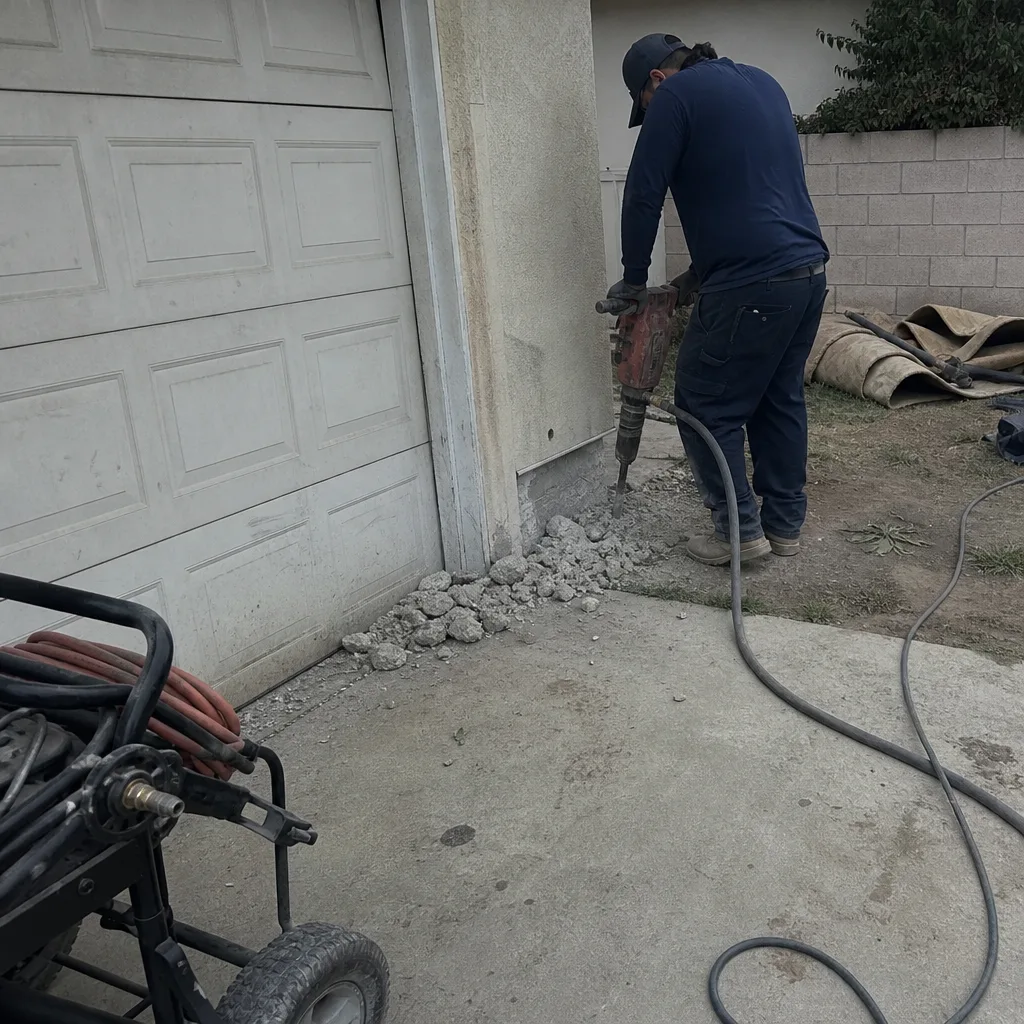 Before
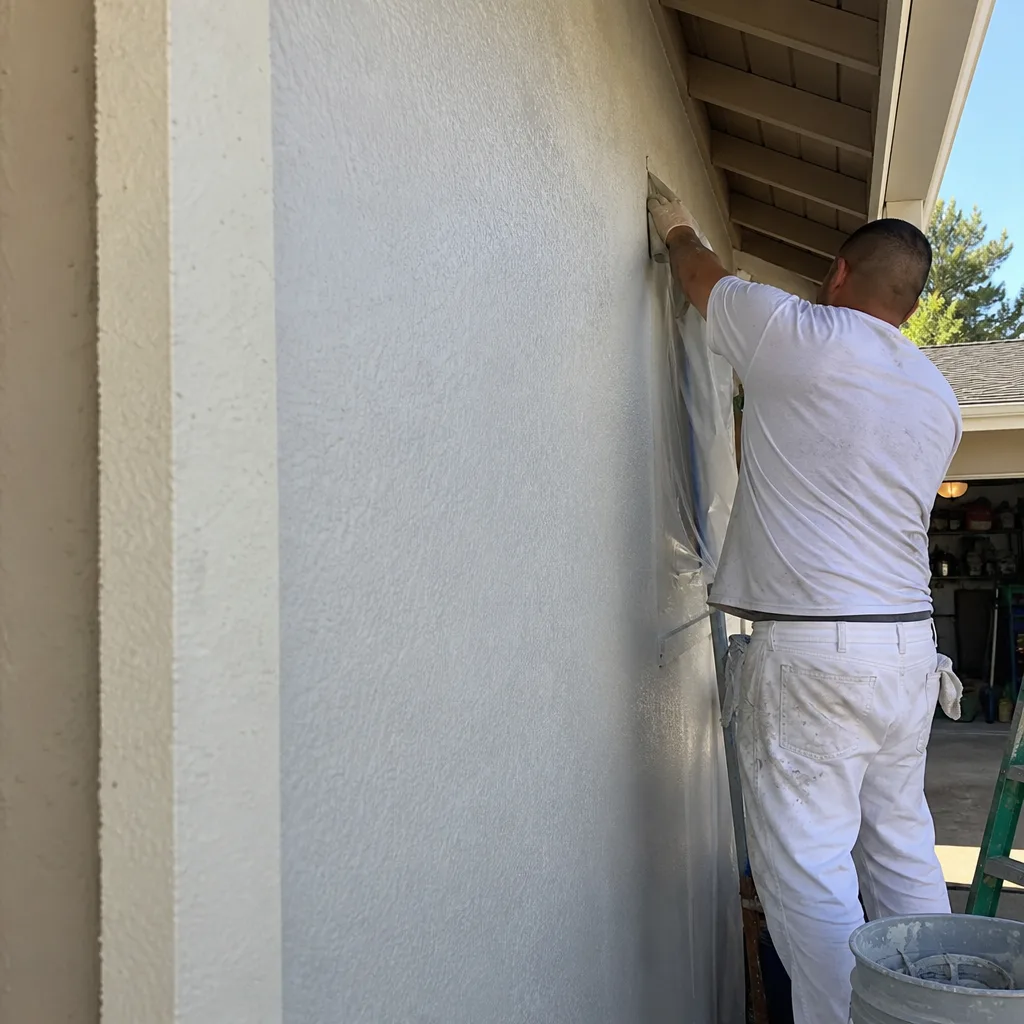 After
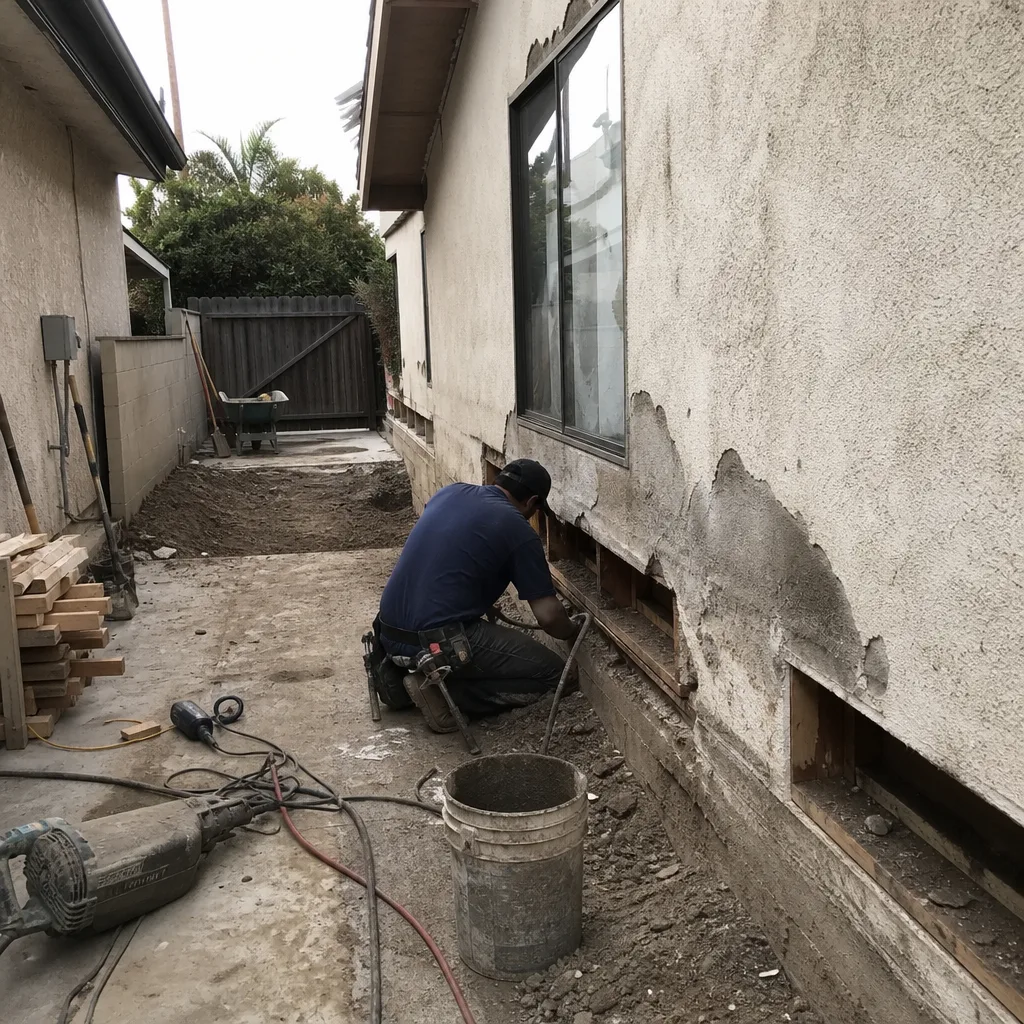 Before
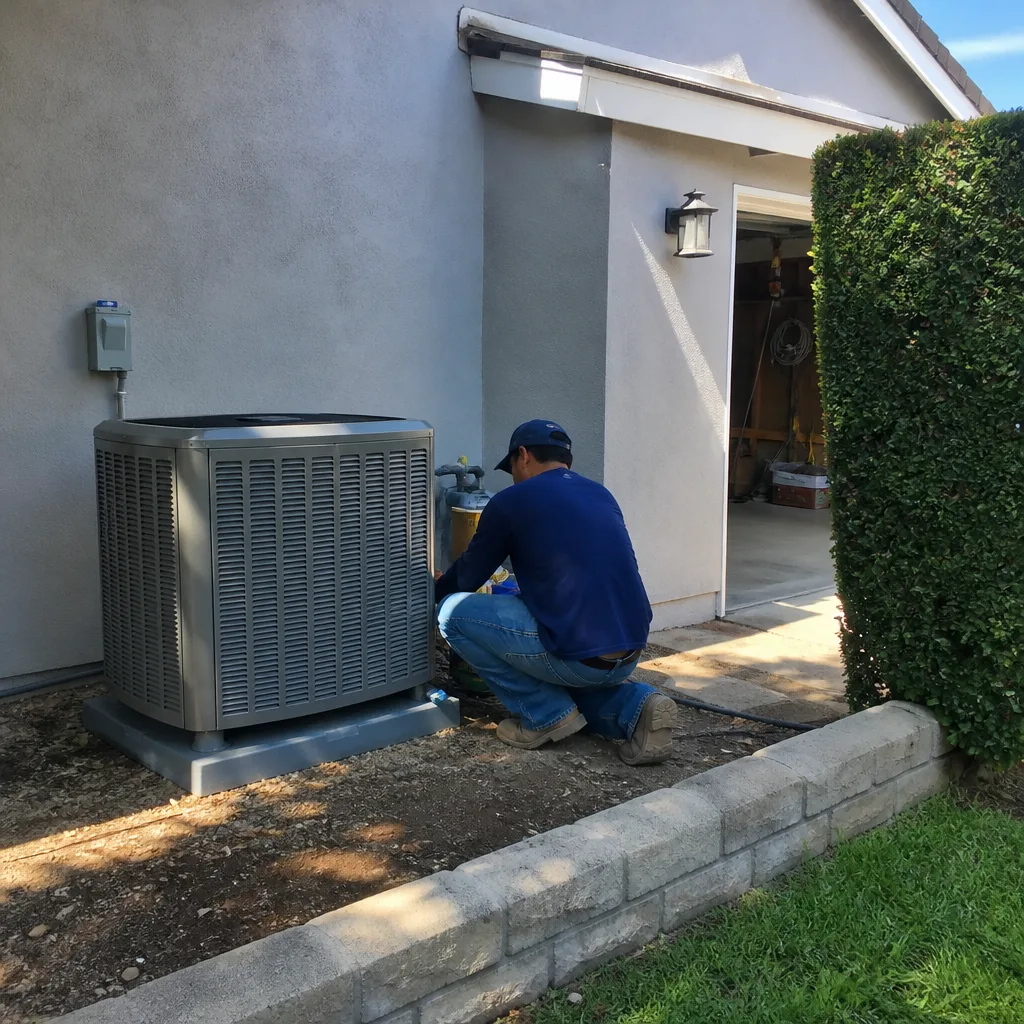 After
 Before
 After
When to Call a Professional
If you’re reading this because you’re already in the middle of a problem, the first question is whether you need medical attention or just a second opinion. If the contractor has stopped showing up, has filed a lien, has done structural work without permits, or has produced work that your local building inspector has flagged, call an attorney who practices construction law, then call the CSLB. If you’re reading this before signing a contract, call a general contractor who can show you the specifications, the permit timeline, the sub agreements, and the lien release system before you commit. Elmwood Contractors offers free estimates in Fullerton, call (866) 253-8554.
Frequently Asked Questions
A general contractor in California may not request a down payment greater than 10% of the total project price or $1,000, whichever is less. This is a CSLB regulation, not a suggestion, and contractors who ask for more are in violation of license law. Call (866) 253-8554 for a free estimate from a licensed Fullerton general contractor.
Yes, you can withhold final payment for incomplete or defective work, but you must document the specific deficiencies, provide written notice to the contractor, and give them a reasonable opportunity to correct the work. The withholding must be proportional to the incomplete or defective work, not the entire contract amount.
A mechanics lien is a legal claim filed against your property by a contractor, subcontractor, or supplier who was not paid. You protect against one by collecting lien releases from every sub and supplier before paying each draw, and by never paying the GC without proof that the subs were paid. This is the single most important paperwork discipline in a remodel.
A kitchen remodel in Fullerton with structural changes and permits typically takes 14 to 20 weeks from contract to final inspection. A non-structural remodel with no plan review can run 8 to 12 weeks. Faster quotes usually mean either no permits or an unrealistic inspection schedule, both of which create bigger problems later.
Look for lippage and hollow tiles, windows and doors that open cleanly, aligned cabinet doors and drawers, plumbing that holds pressure with multiple fixtures running, and exterior flashing that sheds water properly. Document every defect in writing with photos, get a correction deadline in writing, and release final payment only after the corrections are complete.
Elmwood Contractors coordinates full-scope projects across interior and exterior trades, from single-room renovations to whole-home remodels and prefab additions. We’re not a handyman service for small repairs, but we can assess any project size and tell you honestly whether it needs a general contractor or a specialty trade. Call (866) 253-8554 for a free estimate in Fullerton.
The Bottom Line
General contractor problems are almost never random. They’re the predictable downstream results of specific failures: a permit pulled late, a contract written without material specs, an inspection sequence not modeled, a sub not vetted, a lien release not collected. Each failure has a corresponding fix, and each fix is available to any homeowner who knows what to ask for and when to ask it. The homeowner who gets a project done right is not lucky. They’re informed, they read their contract, they document the walkthroughs, and they hire a contractor who can explain the brand going into their home before the first demo hammer swings.
Written by the team at Elmwood Contractors, serving Fullerton since 2011.