
Last updated October 30, 2026
 Kitchen remodeling
 Bathroom remodeling
 Home additions & ADU
 Roofing
 Windows & doors
 Driveway & pavers
 Fence
Free written scope consultation - allowances, timeline, and change-order rules on paper before a single trade is scheduled
How to Hire a Construction Contractor in Fullerton: A Step-by-Step Guide
California’s Contractors State License Board fielded more than 18,000 complaints in a recent year, and here’s what surprises most Fullerton homeowners: the majority weren’t fraud cases. They were scope-gap failures. A cabinet installer finishes his part, a flooring crew arrives three days late, a plumber discovers the rough-in wasn’t where the drawings said, and suddenly nobody owns the problem. When you hire specialty subs piecemeal, you inherit the role of general contractor whether you wanted it or not. This guide walks through how to hire a construction contractor in Fullerton the right way, from license verification to contract structure to the specific questions that expose a disorganized operation before you sign.
Styles & brands we work with
Quick Answer
To hire a construction contractor in Fullerton, verify the contractor’s California license through CSLB with a classification that matches your project (B for general work, C-specialty subs for single-trade jobs), confirm they pull their own permits, get a written contract with named brands and a California-compliant payment schedule, and choose a single-source general contractor when the project touches more than two trades. Then call (866) 253-8554 for a free estimate, or explore our more guides & resources.
Table of Contents
- Step 1: Verify the California License and Understand Classification Letters
- Step 2: Know Who Pulls Permits and Why It Determines Your Liability
- Step 3: Map the Full Scope Before You Talk to Any Contractor
- Step 4: Read Bids for Red Flags in Allowances, Brands, and Payment Terms
- Step 5: Evaluate Vendor Relationships as a Proxy for Material Quality
- Step 6: Build a Contract That Survives a Dispute
- Step 7: Decide Between a Single-Source GC and Specialty Subs
- Fullerton-Specific Factors: Code, Climate, and Neighborhood Context
- Common Mistakes to Avoid
- When to Call a Professional
- Frequently Asked Questions
- The Bottom Line
Step 1: Verify the California License and Understand Classification Letters
Every legitimate contractor operating in Fullerton carries a license issued by the California Contractors State License Board (CSLB). Checking it is non-negotiable and takes under five minutes at cslb.ca.gov. Enter the license number or business name, and the database shows the license status, classification, bond status, workers’ compensation insurance, and any disciplinary actions or complaints filed.
The classification letter tells you what that contractor is legally allowed to do:
- Class B – General Building Contractor: Licensed to manage or perform construction on structures involving two or more unrelated trades. This is what a Fullerton homeowner needs for a kitchen remodel, bathroom renovation, room addition, or any project where framing, electrical, plumbing, and finishes intersect.
- Class C specialty licenses (C-4, C-7, C-10, C-36, C-54, etc.): Each covers a single trade. A C-54 is tile, a C-36 is plumbing, a C-10 is electrical, a C-39 is roofing. A specialty contractor cannot legally act as the general contractor on a multi-trade project.
- Class A – General Engineering: For infrastructure, heavy construction, and grading projects. You won’t need this for a residential remodel.
Here’s the gap most Fullerton homeowners miss: a specialty contractor might quote you on a “full bathroom remodel” and then sub out the plumbing and electrical to people you never meet. That arrangement is not automatically legal, and when something goes wrong, you’re the one stuck between three different companies pointing fingers. A general contractor in Fullerton with a Class B license is authorized to coordinate that entire scope under one agreement.
Also verify the bond is current and the workers’ compensation policy is active. If a worker gets injured on your property and the contractor is uninsured, your homeowner’s policy becomes the first target for the claim.
Step 2: Know Who Pulls Permits and Why It Determines Your Liability
In Fullerton, the City of Fullerton Building Division issues permits for structural work, electrical, plumbing, mechanical, and most remodeling projects beyond cosmetic finishes. The person named on the permit is the legally responsible party for code compliance on that job. This is a serious distinction.
When a contractor pulls the permit, they carry the liability for passing inspections and meeting code. When a homeowner pulls an owner-builder permit, the homeowner assumes all legal responsibility for the work, including defects that surface years later. Some contractors quietly encourage homeowners to pull their own permits to dodge liability or to keep unlicensed workers off the city’s radar. That arrangement is legal in very limited circumstances, but it is rarely in your interest.
Here’s what you want to hear from a Fullerton contractor:
- “We pull all required permits in our name.”
- “Our license number goes on the permit application.”
- “We schedule and meet every inspection. If an inspector flags something, we fix it.”
What you don’t want to hear:
- “You can pull an owner-builder permit and save the fee.”
- “It’ll be faster if you pull the permit yourself.”
- “We can do this without permits and nobody will know.”
That last one should end the conversation. Unpermitted work in Fullerton becomes a problem when you sell the house, when you file an insurance claim, and when an inspector drives by and notices the dumpster. The city can issue a stop-work order, and the cost to bring unpermitted work into compliance often doubles the original permit fee.
Step 3: Map the Full Scope Before You Talk to Any Contractor
You can’t compare bids fairly if each contractor is quoting a different scope. Most Fullerton remodel bids diverge because the contractors made different assumptions about what’s included. Before making a single phone call, write out what the project touches.
Use this checklist as a starting point:
- Interior finishes: cabinets, countertops, flooring, paint, trim, tile, fixtures.
- Structural work: wall removal, header installation, ceiling changes, foundation adjustments.
- Mechanical systems: electrical panel capacity, plumbing rough-in, HVAC ducting, water heater location.
- Exterior envelope: windows, doors, siding, roofing, waterproofing, flashing.
- Site work: fencing, hardscaping, drainage, access for deliveries and dumpsters.
- Post-construction: cleanup, debris hauling, final inspections, closeout documents.
If your checklist touches three or more of those lines, you are hiring for multi-trade coordination, and that changes everything about who you should call. A kitchen remodel in a Fullerton ranch home built in the 1960s typically runs into electrical panel upgrades (those old 60-amp panels cannot support modern appliances), plumbing relocations behind tile, and possibly window or door swaps while the room is open. That is a Class B job with a single point of coordination, not three separate C-specialty contracts that you schedule yourself.
Home remodeling in Fullerton works best when one contractor owns the full scope from interior to exterior, because the trades sequence in a specific order and a change in one spot cascades into three others.
Step 4: Read Bids for Red Flags in Allowances, Brands, and Payment Terms
A bid is a promise. The specificity of that promise tells you a lot about how that contractor will perform. In our experience reviewing bids for Fullerton homeowners, three patterns expose most problem contractors before any work begins.
Red flag one: vague allowances. An allowance is a dollar placeholder the contractor uses when they haven’t specified the actual product. A bid that says “Kitchen cabinets: $8,000 allowance” gives the contractor freedom to spend exactly $8,000 or less, which means your “custom” kitchen becomes whatever they can source cheaply that month. We name the brands going into your home before the contract is signed. A line item should read “KraftMaid cabinetry, specific door style, specific finish, specific hardware” or “Cambria quartz, design name, thickness, edge profile.” A vague allowance is a permission slip for substitution.
Red flag two: front-loaded payment schedules. California law caps down payments: the contractor cannot ask for more than 10% of the total contract price or $1,000, whichever is less, before work begins. Any Fullerton contractor asking for 30% or 50% “to secure materials” is violating state law and signaling cash-flow problems. The legal structure is: deposit capped by law, then progress payments tied to completed, inspected milestones, then a final payment withheld until the job passes final inspection and you have lien releases from every sub and supplier.
Red flag three: the missing change-order protocol. Every remodel hits surprises, especially in Fullerton’s older housing stock where walls conceal knob-and-tube wiring or cast-iron drain pipes. A bid with no written change-order process means every surprise becomes a verbal negotiation. You want language that requires: written description of the change, itemized cost, schedule impact, and your signed approval before extra work starts.
Step 5: Evaluate Vendor Relationships as a Proxy for Material Quality
Here’s a question most hiring guides skip: who does this contractor buy from, and why? A contractor with deep vendor relationships gets better pricing, better lead times, and better warranty support. A contractor who buys whatever’s on sale at the big-box store this week is gambling with your project.
Ask your contractor to name their suppliers. The answer reveals more than a website ever will. A contractor with established relationships across 50+ named brands spanning cabinetry, countertops, plumbing, roofing, windows, doors, fencing, and hardscaping has spent years figuring out which products fail in the field and which ones hold up in Southern California’s specific conditions: UV exposure, seasonal Santa Ana winds, and a wet-dry cycle that punishes cheap flashing and caulking.
Specific brands matter because they carry their own support systems. GAF, CertainTeed, and Owens Corning, for example, train and certify roofing contractors, and the material warranties only apply when an authorized installer does the work. The same holds for Cambria, which controls its fabrication network tightly. A contractor who can put Kohler, Moen, Toto, or Grohe fixtures in your bathroom with real warranty coverage has standing with those manufacturers. That standing protects you upstream, because the manufacturer won’t send a rep to argue about a warranty claim for a product installed by an unknown quantity.
When you hear a contractor position products naturally, as trade-offs in your budget and climate rather than as a one-size pitch, you’re hearing material-agnostic guidance. The right material for your budget and your Fullerton climate comes from a vetted lineup, not a single supplier’s catalog.
Step 6: Build a Contract That Survives a Dispute
A good contract is not a formality. It is the document that determines who pays when the schedule slips, when a sub files a mechanics lien, or when the countertop arrives with a crack. California law requires written contracts with specific elements for jobs over $500, but the mandatory minimum is not enough protection for a major remodel.
Your contract should include:
- Full legal names and license numbers: both the contracting entity and every major subcontractor if known. If the GC changes subs mid-job, that triggers a contract amendment.
- A schedule of work: not just a completion date, but a sequence. Demo, rough-in, inspections, insulation, drywall, finishes, punch list. Each phase with a best-effort start window.
- Named materials with SKU-level specificity: brand, model, color, size, finish. “Toto Drake toilet, white, C744SG” not “new toilet.”
- Payment schedule tied to milestones: with the California-legal deposit cap, progress payments only after documented completion and inspection where required, and no final payment release until lien waivers are in hand.
- Change-order protocol: written, signed, itemized, with schedule impact stated before work proceeds.
- Permit and inspection responsibility: contractor pulls permits in their name, schedules inspections, and resolves failed inspections at no additional cost unless the failure traces to a change you requested.
- Warranty scope: what’s covered, for how long, and how to make a claim. California law provides a one-year fit-and-finish warranty on new construction and a four-year warranty on certain systems; your contract should state this explicitly.
- Dispute resolution: mediation or arbitration clause, or at minimum the governing jurisdiction. A Fullerton project should be governed by California law with disputes resolved in Orange County.
If a contractor resists putting any of these items in writing, treat the resistance as disqualifying. A written line-item quote with fixed pricing and no change orders unless signed is the standard serious Fullerton contractors meet without blinking.
Step 7: Decide Between a Single-Source GC and Specialty Subs
Now we come to the core decision of this guide, and it’s not about price. It’s about who owns the gaps.
When you hire a specialty sub for each trade, you are effectively acting as the general contractor. That means you are responsible for:
- Sequencing: electrical rough-in before drywall, plumber before tile, roofer before interior finishes on an addition. If the plumber is two days late, the drywall crew either waits or you pay them to leave and return.
- Liability gaps: the tile contractor does not warranty the plumber’s work. The cabinet installer does not warranty the electrician’s outlet placement. Every trade has a scapegoat, and it’s usually the trade that left.
- Code responsibility: if an inspector fails a rough-in because the framing was wrong, the electrician will tell you to call the framer. You are the one with the failed inspection on the permit.
- Change-order cascades: when the homeowner moves a wall, three trades change. With separate subs, that’s three change orders, three markup rates, and three schedules to renegotiate.
- Hiring the first bid without reading the scope line by line. Two Fullerton bids for the same kitchen can differ by $30,000 because one included electrical upgrades, plumbing relocation, and permit fees while the other assumed none of those would be needed. The lower bid isn’t cheaper; it’s incomplete.
- Pulling an owner-builder permit to “save money.” This shifts all liability for code compliance, worker safety, and construction defects onto you. The savings are a rounding error compared to the exposure.
- Letting the contractor use vague allowances for major material categories. “Cabinets, countertops, flooring” with dollar allowances is a bid to substitute. You will not get the product you discussed in the sales meeting.
- Paying more than the California-legal deposit. State law caps the down payment at 10% or $1,000, whichever is less. A contractor asking for more is either ignorant of the law or testing your willingness to be exploited.
- Hiring a specialty sub to run a multi-trade project. A C-specialty license does not authorize general contracting. You inherit every coordination failure and liability gap that follows.
- Skipping the CSLB license check because the contractor “seemed professional.” The CSLB database takes four minutes to search and reveals suspended licenses, disciplinary actions, and lapsed bonds. Skipping it is an unforced error.
- Not requiring lien releases before final payment. In California, subcontractors and suppliers who don’t get paid from the contractor can file mechanics liens against your property. You can pay the contractor in full and still lose a lien lawsuit. Get conditional and unconditional lien releases from every sub and supplier before you release that last check.
A single-source general contractor eliminates those gaps because one company carries the master schedule, the master contract, and the relationship with every sub. Elmwood Contractors is built for exactly this: one contractor, every trade, interior to exterior. From kitchen countertops to roofing systems to prefab additions, everything coordinates under one project plan and one point of accountability.
The math favors single-source on any project that touches more than two trades. You pay for coordination either way. With a GC, you pay one coordinated markup and get one warranty umbrella. With piecemeal subs, you pay with your own time, your own schedule risk, and the very real possibility that a mistake in one trade becomes a blame-shifting exercise with no single owner.
Fullerton-Specific Factors: Code, Climate, and Neighborhood Context
Fullerton presents specific conditions that should shape your contractor choice. The city’s housing stock includes a high percentage of homes built between 1920 and 1970, concentrated in neighborhoods like the historic district near downtown Fullerton, Sunny Hills, and the ranch-style tracts east of Harbor Boulevard. These homes come with the retrofit challenges of their era: undersized electrical panels, galvanized plumbing that has outlived its useful life, post-and-pier foundations in some of the older stock, and rooflines that were never designed for modern insulation requirements.
Fullerton’s climate also drives material decisions. The city sits in a mild Mediterranean band, but it’s close enough to the Santa Ana Canyon that wind events can push 50 to 60 mph through certain corridors, particularly along the northern edge of the city near the foothills. That wind loading matters for roofing underlayment, fascia attachment, fencing structure, and window and door sealing. The wrong product in the wrong exposure fails early, and the failure shows up as a water stain two years after the contractor’s warranty expired.
Fullerton’s Building Division enforces the California Building Standards Code with local amendments. If your project involves structural changes, the city will require engineered drawings sealed by a California-licensed engineer or architect. That engineering cost is not optional, and any contractor who says they can skip the structural engineering on a wall removal is either naive or planning to do unpermitted work.
Home renovation in Fullerton also means working within the city’s planning rules for setbacks, height limits, and accessory structures. A detached ADU or prefab addition in Fullerton triggers zoning review, and the city has specific requirements for utility connections, drainage, and fire access. Most homeowners learn these rules the hard way. A contractor with local experience knows them before the plans are drawn.
Common Mistakes to Avoid
When to Call a Professional
Some Fullerton projects are genuinely DIY-adjacent: interior painting, trim work, a faucet swap. Everything else deserves a professional, and the line isn’t about skill, it’s about consequences. Call a contractor when the project involves structural changes, electrical or plumbing system work, waterproofing, window or door replacement, roofing, or any scope that combines two or more of those systems. The consequences of getting waterproofing wrong in a Fullerton bathroom don’t show up for 18 months, and by then the subfloor is compromised, the drywall is moldy, and the repair cost has tripled. A licensed, insured contractor with a Class B license and permit responsibility in their name is the right call for anything beyond a single-trade cosmetic scope. Elmwood Contractors offers free estimates in Fullerton – call (866) 253-8554.
Frequently Asked Questions
General contractor fees in Fullerton typically run 15% to 25% of total project cost on top of the trades’ direct costs, so a $100,000 remodel carries roughly $15,000 to $25,000 in GC fee depending on scope complexity, engineering requirements, and the contractor’s operating overhead. A single-source contractor with manufacturer relationships may secure material pricing that offsets part of that fee, but expect to pay for coordination. Call (866) 253-8554 for an exact quote on your project – estimates are free.
Most permit-pulled kitchen remodels in Fullerton run 8 to 14 weeks from demolition to final inspection, barring surprises like a failed electrical panel upgrade or structural discovery behind the walls. The city’s inspection scheduling and the availability of specific cabinet lines factor into the timeline. A realistic contractor gives you a phased schedule, not a single completion date. Call (866) 253-8554 to discuss a realistic timeline for your project.
Yes, for virtually any project beyond cosmetic finishes like paint and flooring, and the City of Fullerton Building Division enforces this consistently. Structural changes, electrical work, plumbing relocations, window and door swaps, roofing, and additions all require permits. Unpermitted work creates disclosure problems when you sell and can trigger a stop-work order during construction.
A Class B General Building Contractor license authorizes the holder to coordinate and perform work involving two or more unrelated trades, which is exactly what a whole-home remodel or room addition requires. A Class C specialty license covers only one trade, such as plumbing, electrical, or roofing. If your project spans multiple trades, hire a Class B contractor as the single point of responsibility.
No. California Business and Professions Code caps the down payment on home improvement contracts at 10% of the contract price or $1,000, whichever is less. Any Fullerton contractor who asks for more is violating state law. Payments after the deposit should be tied to completed milestones, not calendar dates. Call (866) 253-8554 to get a written quote with a legal payment schedule.
Search the CSLB’s website at cslb.ca.gov using the contractor’s license number, business name, or the name of the qualifying individual. The listing shows license status, classification, bond amount, workers’ compensation coverage, and any disciplinary actions, citations, or complaints on file. Run this search before signing anything, even if the contractor came from a referral.
The Bottom Line
Hiring a construction contractor in Fullerton comes down to accountability structure. Verify the license, know who pulls the permit, map the full scope, read every bid line for specificity, evaluate vendor relationships as a signal of how the contractor actually sources materials, and build a contract that names brands, ties payments to milestones, and respects California’s deposit cap. The most expensive mistake in Fullerton home improvement isn’t the highest bid. It’s the bid with vague allowances, missing permits, and no single owner for the gaps between trades. One contractor, every trade, interior to exterior, with named brands before the contract is signed, is the rational standard. Call (866) 253-8554 for a free estimate on your project.
Written by the team at Elmwood Contractors, serving Fullerton since 2011.
See the difference
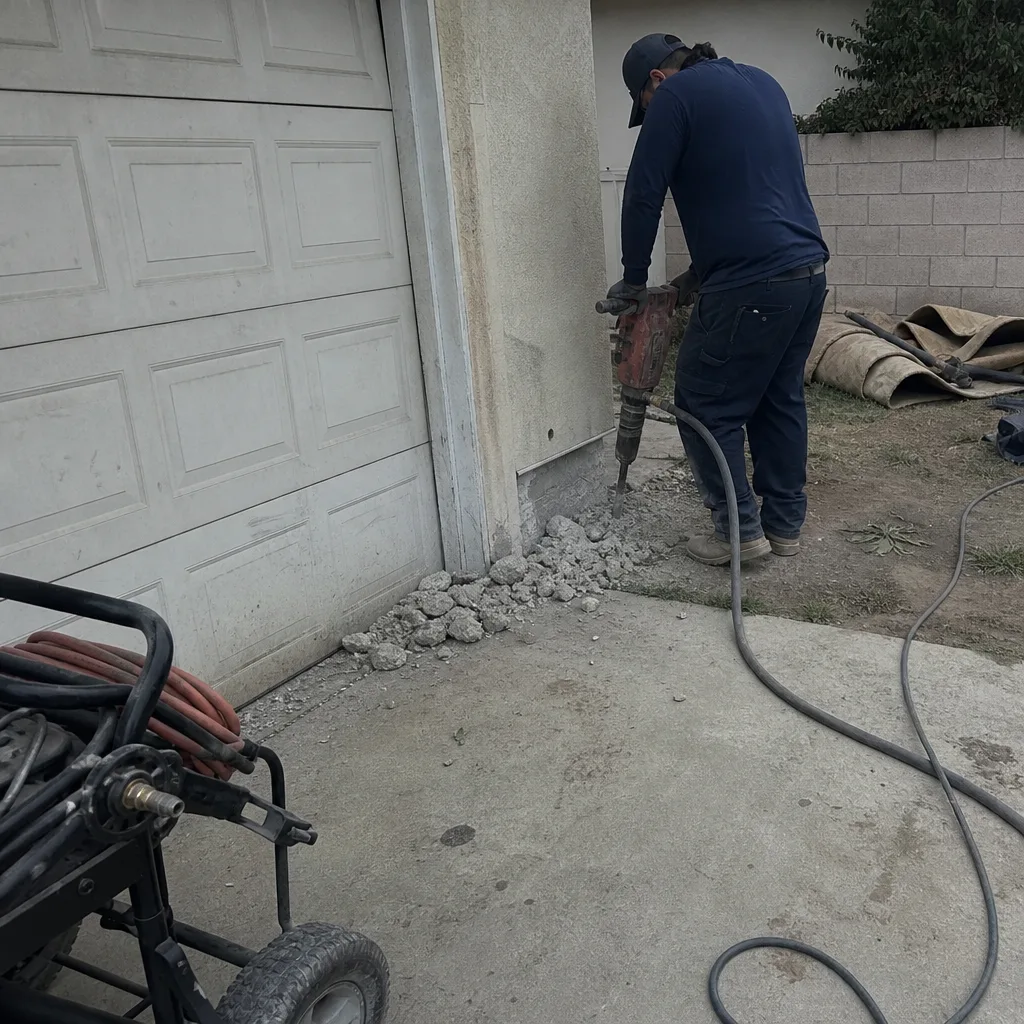 Before
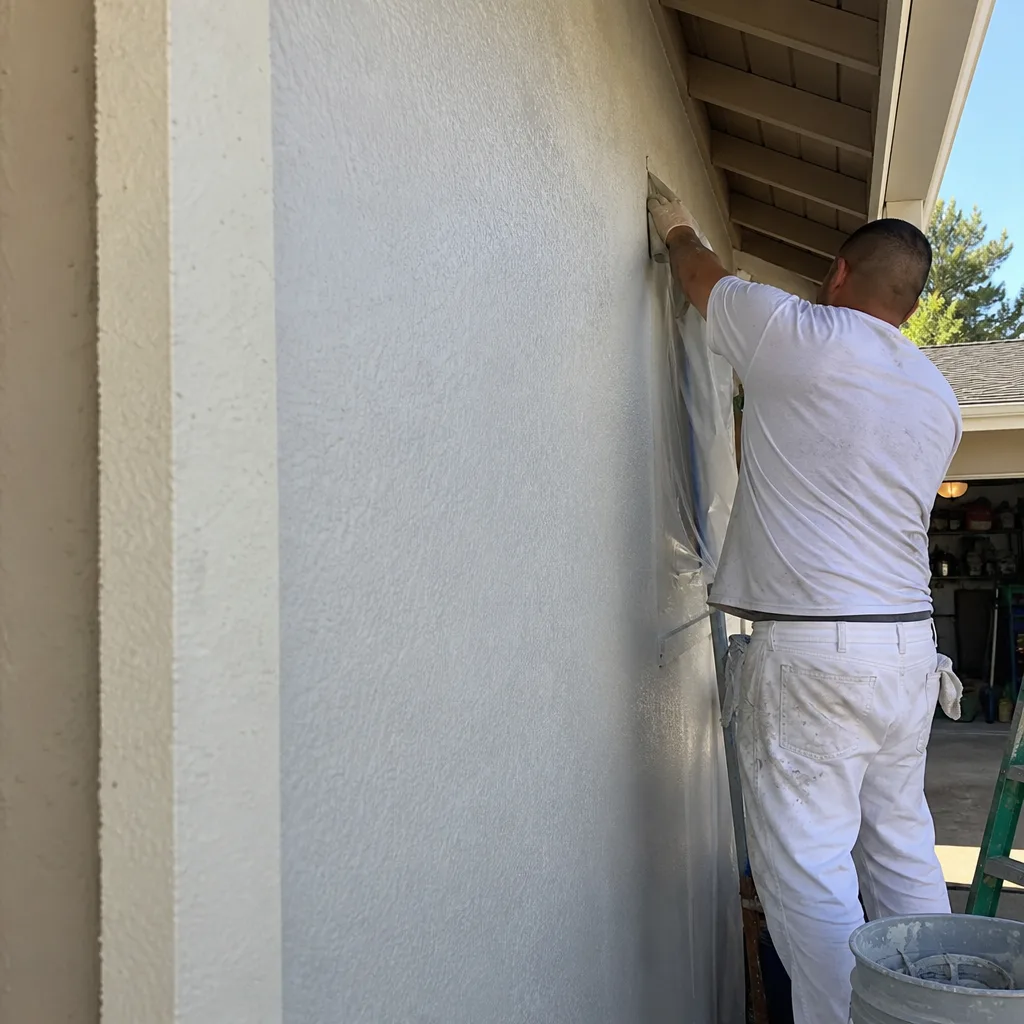 After
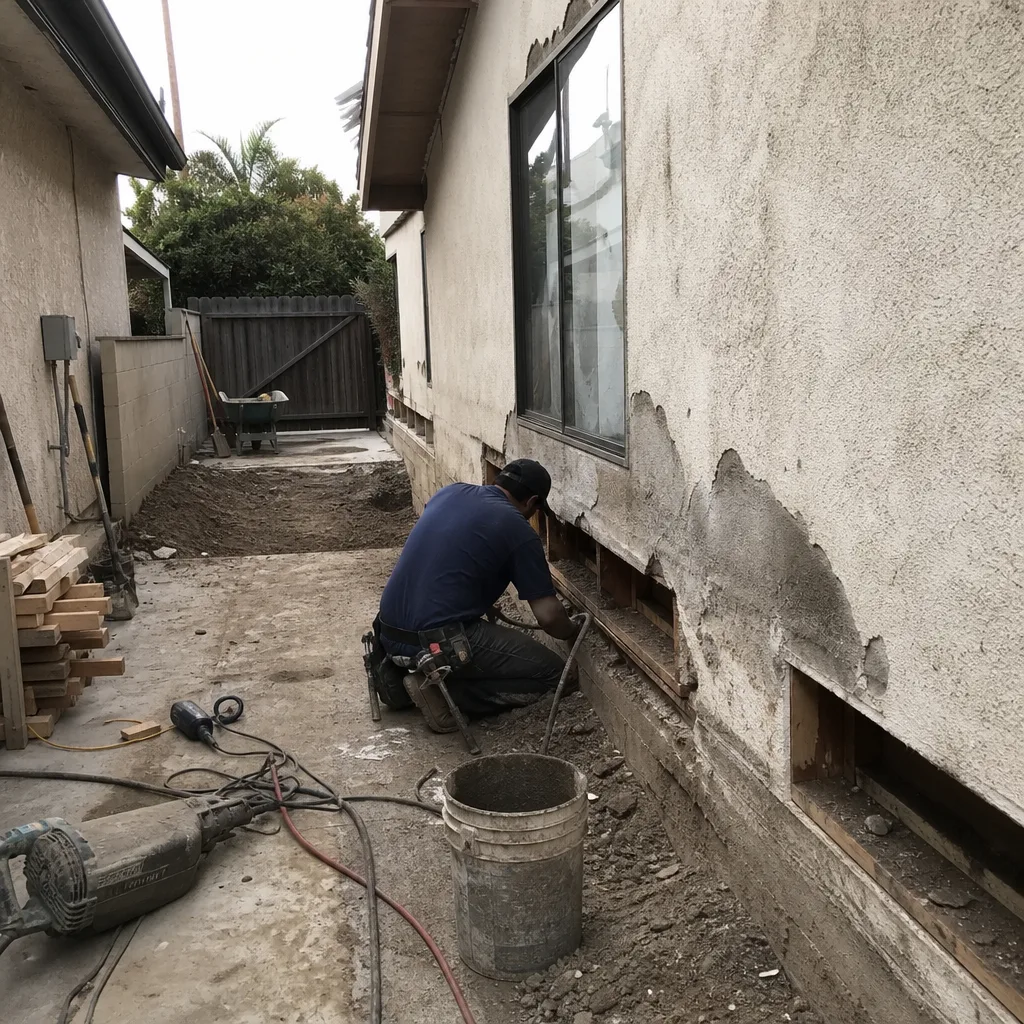 Before
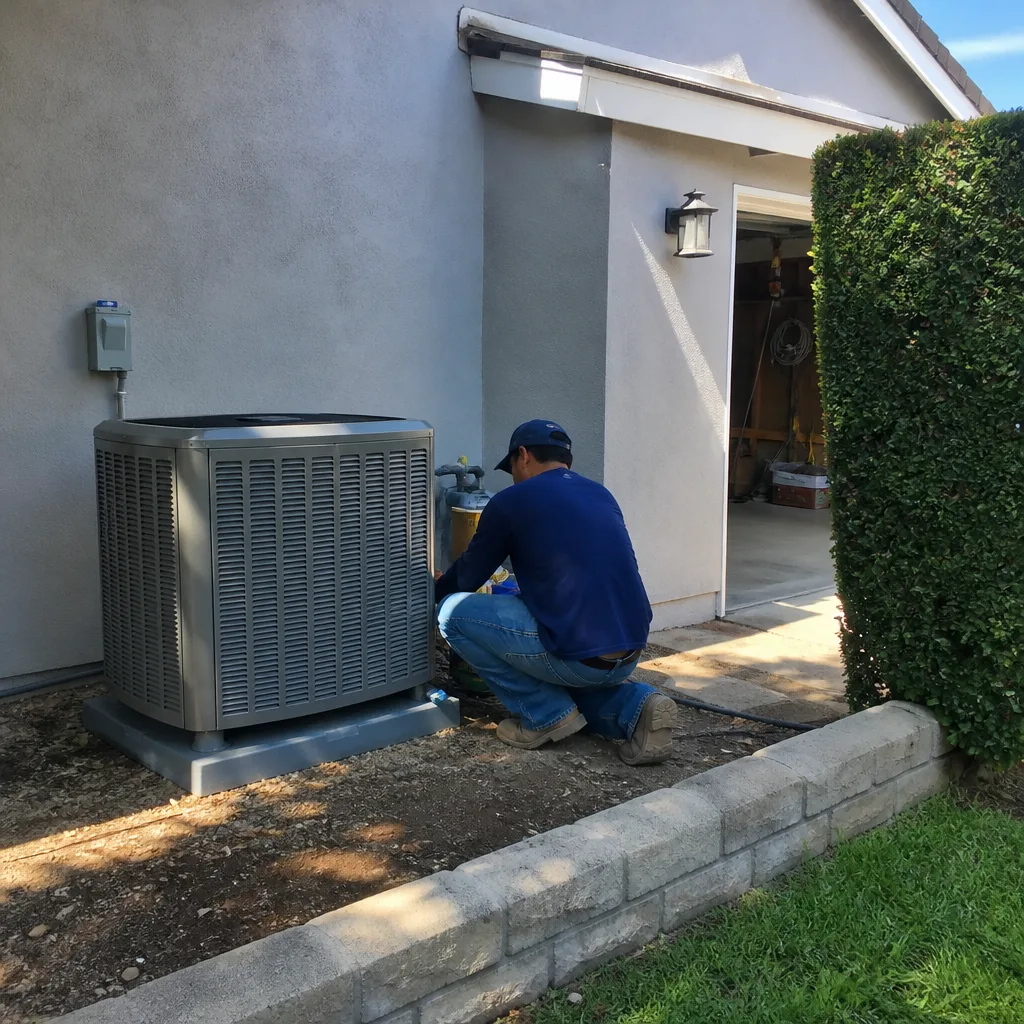 After
 Before
 After